
'Till the BJP does not understand Kejriwal they cannot win Delhi.'

Prospects of a bumper kharif harvest are expected to lower food inflation in the coming months, making the country's inflation outlook benign, the Union Ministry of Finance (FinMin) said in its monthly economic report for October released on Monday.

The unions also suggested banks can extend special and exclusive loans to the airline to pay the salary dues or some subsistence payments to them against proper collateral.

The most striking features of this Budget was its focus on simplification and improving the ease of doing business in India, asserts Kaku Nakhate.

The association also wondered how the brand value of Kingfisher was considered as a collateral while sanctioning a loan, and alleged that even when RBI knew that this was a "deliberate default", no action was taken by the banks.

Perhaps because the Modi government had some differences of opinion with two of the economist governors (one of whom was appointed by the Manmohan Singh government), there is a view that its political leadership prefers a civil servant to head the RBI, notes A K Bhattacharya.

As per the mega consolidation plan, Oriental Bank of Commerce and United Bank of India will merge into Punjab National Bank (PNB); Syndicate Bank into Canara Bank; Andhra Bank and Corporation Bank into Union Bank of India; and Allahabad Bank into Indian Bank. Following this merger, PNB will become second largest after the SBI, Canara Bank fourth, Union Bank of India fifth and Indian Bank seventh biggest public sector lender.

'During his stint as prime minister, he got 270 million people out of poverty.' 'This, according to the World Bank, is the fastest compression of poverty anywhere in the world.' Arvind Mayaram, the former finance secretary, recalls his encounters with Dr Manmohan Singh.

Keen to capitalise on the growing geopolitical support from African nations after the recently concluded G20 Summit, India is working with the African Union to hold the fourth India-Africa Forum Summit later this year in Kenya's Nairobi, sources said. Prime Minister Narendra Modi is expected to attend the mega meet along with as many as 50 African leaders, they added. First held in New Delhi in 2008, the India-Africa Forum Summit marked India's initial diplomatic efforts to seek a comprehensive partnership with the African bloc of nations as a whole, at a time when China had begun its own outreach.

Bank unions appear to be divided on whether or not to go on a two-day nationwide strike on October 5 and 6.

Gold, a safe-haven bet, is likely to continue its record-smashing journey in the New Year, rising to Rs 85,000 per 10 grams and even Rs 90,000 level in domestic markets if geopolitical tensions and global economic uncertainties continue.

Budget 2025-26 delivers a carefully calibrated strategy-stimulating demand and investment while keeping fiscal discipline intact. In an environment marked by global trade disruptions, and a softening in urban consumption, Finance Minister Nirmala Sitharaman has taken a measured approach.

To further tighten its control of practising accountants, the Centre has brought within the ambit of the Prevention of Money Laundering Act (PMLA) their "financial transactions" such as operating and managing their client firms and trusts, and buying and selling business entities. The Union finance ministry issued a gazette notification on this on Wednesday. Under the new rule, chartered accountants, company secretaries, and cost and works accountants carrying out such transactions (on behalf of their clients) will now be required to go through the Know Your Company (KYC) process before commencing work.

Partha Pratim Sengupta, who will be taking charge as the MD & CEO of Bandhan Bank in early November, has his task cut out. The Kolkata-based lender, which converted itself from a microfinance institution to a universal bank, is in its 10th year of operation. The bank was able to cut down the share of the micro loan book over these years.
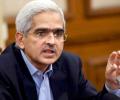
The December meeting of the Reserve Bank of India's (RBI's) six-member Monetary Policy Committee (MPC) will start on Wednesday even as there is no clarity on whether Governor Shaktikanta Das, the chair of the panel, will continue in office after his term ends next week. The outcome of the meeting will be announced on Friday by Das at 10 in the morning.
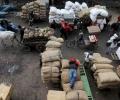
India's economic growth rate is estimated to slip to a four-year low of 6.4 per cent in 2024-25, mainly on account of poor showing by the manufacturing and services sector, according to government data released on Tuesday. The gross domestic product (GDP) rate of 6.4 per cent will be the lowest since the Covid year (2020-21) when the country witnessed a negative growth of 5.8 per cent.

Balance-level delinquencies in the credit card segment saw a 17 basis points (bps) year-on-year (Y-o-Y) rise in the quarter ending June 2024 (Q1FY25). In all other credit segments, including personal loans, delinquencies declined even as retail credit growth moderated, consequent to banks tightening the supply of credit to the unsecured segments, a report by TransUnion CIBIL said on Monday. Data shows that balance-level delinquencies, measured in terms of 90 days or more past due, in the credit card segment stood at 1.8 per cent in Q1FY25- highest among all other credit segments.

'Investors should not commit fresh money to these stocks right now, unless they can hold for the next three to four years.'

The Budget should undertake further reductions in import tariffs and seriously consider an announcement of India's intention to join one or both of the two Asian mega-regional free trade agreements, suggests Shankar Acharya, former chief economic adviser to the Government of India.

Operations of public sector banks (PSBs) may be impacted as bank union AIBEA has given a strike call for Saturday to oppose incessant outsourcing of jobs. Although the officers are not part of the strike, there may be some impact on cash deposit and withdrawal, clearing of cheques etc. Several banks, including Bank of Baroda and Punjab & Sind Bank, have already informed their customers about the potential impact on services if November 19 strike materalises.

More than 50 per cent of SIP accounts come from semi-urban and rural areas.

'It's a clear case of political patronage helping an individual grow.'
However, the likely impact of strike may not be much excluding few areas, said SBI.
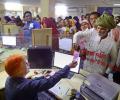
Union Finance Minister Nirmala Sitharaman will review the performance of regional rural banks (RRBs) after the Budget session of Parliament, according to two people familiar with the matter. The finance minister will review the performance of RRBs after August 13. The review will include discussions on enhancing the digital capabilities of RRBs, said a senior government official.

Reserve Bank of India Governor Shaktikanta Das has been ranked as the top central banker globally for the second consecutive year by US-based Global Finance magazine. "Happy to announce that for the 2nd consecutive year, RBI Governor @DasShaktikanta has been rated 'A+', in the Global Finance Central Banker Report Cards 2024," the RBI said in a post on X.
Bank unions on Monday requested Prime Minister Manmohan Singh to allow resumption of large scale recruitments in public sector banks and disallow outsourcing in the sector as it would affect job opportunities.

The monthly Rs 2500 payment for poor women is expected to cost Rs 11,000 crore while the pension scheme of Rs 2000 for every senior citizen will cost around Rs 4100 crore. The Yamuna clean up will cost over Rs 10,000 crore while a similar amount is required to upgrade Delhi's hospitals. Ultimately, the new BJP government will have no choice but to ask the centre for financial support, notes Rashme Sehgal.

The Budget proposals are expected to boost the fortunes of consumer goods and fast-moving consumer goods companies, which have been struggling with poor consumer demand for more than a year. The Budget announcements, such as the increase in standard deduction by Rs 25,000 for income-tax payers and slab revisions, will put more money in their hands, boosting consumer demand. Private consumption is also likely to benefit from a new scheme to offer internships to 10 million youths in the country's top 500 companies.

Employees of four bank unions participating in strike are from All India Bank Employees Association, Bank Employees Federation of India, All India Bank Officers' Association and National Union of Bank Employees.

'Suddenly we had a new comprehension of affairs, which reminded that the luxury of politics floated atop a foundation by economics.' 'Along with this, finance ministers became crucial in molding the perception and reputation of Union Cabinets.' 'Governments couldn't afford a wrong person in that portfolio,' asserts Shyam G Menon.

Unprecedented bribery charges, farewells, separation, failed union, monumental mergers and record-breaking IPOs, along with a healthy dose of online happenings in the form of spat and lessons in customer care, corporate India saw it all in 2024.
Shaktikanta Das will demit the office on Tuesday after completing six years as the 25th Governor of the Reserve Bank of India. Revenue Secretary Sanjay Malhotra will replace him as the 26th Governor. He was appointed as the Governor on December 12, 2018, after the abrupt exit of Urjit Patel.

Service Employees International Union said in a letter to the Obama administration's 'pay czar' Kenneth Feinberg that Ken Lewis and other executives at banks supported by taxpayer money should be prevented from receiving any retirement or severance package until the banks commit to stop foreclosures.

RBI Governor Shaktikanta Das kept the red flag on cryptocurrencies flying, warning that the next financial crisis can be triggered by private cryptocurrencies if such speculative instruments are allowed to grow.

AIBEA has decided to write to the government and RBI against infusing money into Jet Airways. State-owned banks, including SBI and PNB, are the main lenders to Jet.

This is the second all-India bank strike in as many months.

Union Finance Minister Nirmala Sitharaman on Tuesday commended Indian financial sector regulators for doing a "world-class job" and bringing greater transparency into the system. Underlining that she is not against questioning or critiquing regulators, Sitharaman said there is a need to be "extremely conscious" about contributions made by them as well. Speaking at the Financial Express Best Banks Awards, the finance minister said, "I strongly recommend that facts are taken on board before we discuss anything to do with the regulators, strictly speaking."

The bank unions had threatened to go on 4-day strike from February 25.

In the months immediately following the 2024 tragedy, reporting on the landslide per se had been a straightforward affair. On one side was death and destruction. On the other side, survivors and the business of survival. It was black and white. What direction to take was clear. Rehabilitation in comparison, felt like a complex situation. One that is fraught with shades of grey. As grey as human life, explains Shyam G Menon.

After the finance minister directed public sector banks to join the account aggregator (AA) ecosystem, 5-6 major ones, including State Bank of India (SBI) and Bank of Baroda are expected to go live by July-end. Sahmati, an industry alliance for the AA ecosystem, has been working with PSU banks to get them onboarded for quite some time now. So far, Union Bank of India and Punjab National Bank (PNB) have gone live on the AA ecosystem. While Union Bank has been live for a while, PNB went live earlier this month.
 © 2026 Rediff.com - Advertise with us - Disclaimer - Privacy Policy - Sitemap - Feedback - About us - Terms of use - Grievances